
The Costs of Running a Node
Posted 3 months ago by Almach
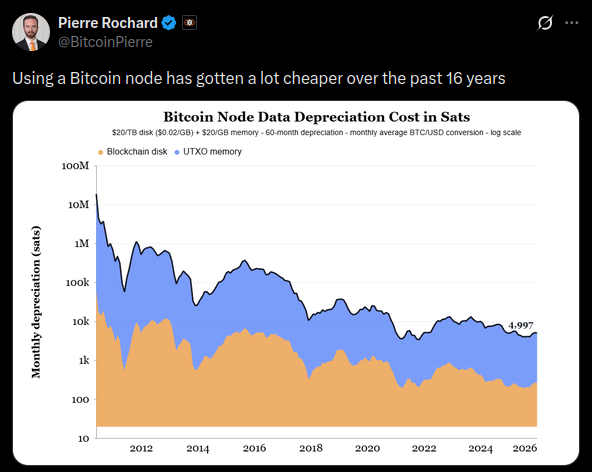
Running a Lightning node is a balancing act between technical participation and real-world economic reality. While some Bitcoiners suggests that nodes are cheaper than ever when priced in sats, this perspective frequently clashes with the lived experience of newcomers who must convert fiat currency into hardware.
For veteran node runners, this year has been a clear shift from the "cheap hardware" trend of previous years. Upgrading your stack today isn't just about the nominal cost; it's about competing for limited inventory against multi-billion dollar capital expenditures. While those holding older "legacy" sats might see their purchasing power as a hedge, those of us who have had to source new hardware in the last 12 months know that the fiat-entry barrier for a reliable, performant node has spiked significantly.
The Core Conflict
The debate boils down to how we measure "cost":
- The Bitcoiner Perspective: If you hold a long-term Bitcoin stash, the relative cost of the components required to run a node (in terms of your BTC-denominated wealth) has indeed trended downward over the last 16 years.
- The Newcomer Reality: For a new user joining the ecosystem today, they are paying for hardware using current fiat prices. With server DRAM costs having surged nearly 95% in early 2026 due to AI demand, the barrier to entry—measured in the currency they earn and spend—feels like an uphill battle, not a tailwind.
Furthermore, running a node is rarely a path to immediate profit. Most operators view it as a contribution to the network, a business necessity for merchants, or a hobbyist project. When you add the hidden "costs" of time, technical maintenance, and the need for reliable, high-uptime hardware, the economic justification becomes even more complex.
A Discussion for Experienced Operators
To those of you who have been running nodes for years and have faced the frustration of upgrading or maintaining your setup during this AI-driven supply crunch:
"Does the 'priced in sats' argument for node affordability hold water when you’re actually trying to source hardware in today’s market, or is it a misleading metric that obscures the reality of how difficult and expensive it has become to maintain a high-uptime, performant node in 2026?"
I'm curious to hear your take: When you look at the real-world friction of hardware acquisition and the operational costs of keeping a node competitive, do you feel like you're being priced out of the hobbyist/independent operator tier? Or do you see the current hardware constraints as just another challenge to be optimized through better engineering and local infrastructure?
0 Comments
Please login to post comments.

Latest news
BTCPayServer Vulnerability!
Posted 3 months ago
BIP-110 Preparation: Closing Channels
Posted 3 months ago

🌟 Introducing Almach Node: A Beacon of Lightning on the Bitcoin Network 🐶😺
Posted 3 months ago